


This week, we released the first page of our newest comic series “Rooted in Community” on Wendell Berry, creation care, and living as salt and light in our local communities. To kick off, we’re starting with Jess and Angela Correll — neighbors of Berry and people who live out his principles with excellence. In this first part of our interview, they share how seeking the welfare of a small town means restoring beauty, creating good work, and treating people with the kind of integrity that shapes culture.
Mark Rodgers:
What does seeking the welfare of the city — from Jeremiah’s letter to the exiles — mean to you all, theologically and in how you’ve applied it in your own lives, particularly with what you’ve done with Stanford and your local community down there? How do you apply that? What does that mean to you?
Angela Correll:
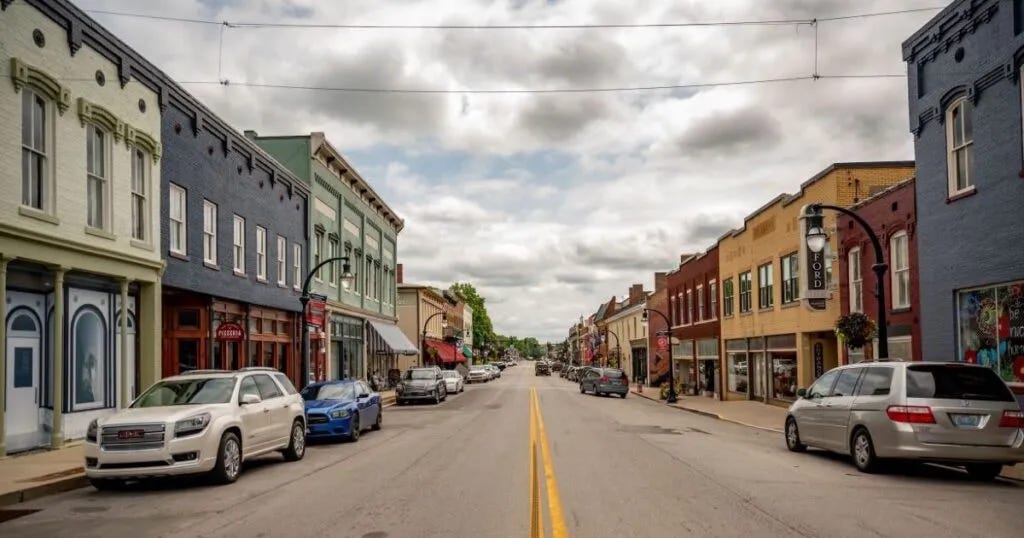
I think what we try to do here in Stanford is to create, renovate buildings, bring back the beauty of the old, so that there’s beauty in the small town. But you have to have life with beauty or beauty fades again. And so we try to create businesses, hospitality businesses, like a restaurant and boutique inn and the little store, to bring people into town around a table, and then also employ lots of local people.
And that has been exciting. I think it’s something that can serve the community, and yet the employees all benefit, and we get the benefit too. It’s something that brings life to the community that’s long lasting if the next generation can carry it on. And so I feel like the work that we do is part of that calling to bring the beauty back and to restore what goes away when there’s not flourishing happening in a place.
Jess Correll:
I really think, too, it’s paying people well. Jobs are very important, but good paying jobs are even better. And so, like for us, we try to stay ahead of the minimum wage as it increases here in Kentucky. We’re at seventeen dollars an hour now as our minimum wage, and we have great benefits.
People in our small town definitely have access to retirement, health insurance, life insurance — all the things we’d want as owners. Those are the things they want and should have as well. So I’ve always thought: if you want your community to be as strong as possible, make sure you’re paying people fairly and appropriately. Pay people what they deserve for the labor you’re asking them to give you.
That’s part of doing right by your community. And from there, it connects to creation care — the beef, the cattle, all the agricultural tie-ins you could talk about with Wendell Berry. But at the most basic level, if you don’t treat people well, you won’t have much influence on your culture… or the influence you do have won’t be good.
This concludes segment 1 of our interview series with the Correll family. Join us next week as we continue our conversation by exploring how the Corrells see business itself as a way to love their neighbors well.